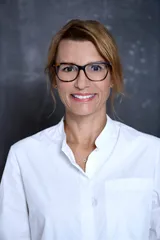
 Dr Nathalie Helm
Twelve biological processes behind aging, and the everyday factors that influence them.
We all get older. But we do not age in the same way. Two people of the same age can differ markedly in physical capacity, metabolic health, cognitive function, and biological age. What actually happens in the body as we age, and how much can we influence ourselves?
For a long time, aging was regarded mainly as inevitable wear and tear. Today we have a considerably more detailed picture. Aging is not a single process and is not governed by one biological clock. It is a network of biological changes that develop over time and influence one another.
One of the most widely used scientific models for describing this is the Hallmarks of Aging. It was introduced by Carlos López-Otín and colleagues in 20131 and updated in 2023.2 Today the model covers twelve biological processes that together help us understand what happens as the body ages.
From cellular damage to altered function
Simplified, the twelve processes can be seen as a chain in three steps.
1. Damage arises
DNA is continuously exposed to damage. The telomeres that protect the ends of the chromosomes shorten. The regulation of which genes are active changes, the cells’ ability to produce and take care of proteins gradually becomes less efficient, and the cell’s own recycling system works less well.
These are:
- Genomic instability. DNA damage accumulates in the cells while the repair systems become less efficient.
- Telomere shortening. The telomeres shorten with cell division and eventually affect the cells’ ability to keep dividing.
- Epigenetic alterations. The regulation of which genes are active changes with age.
- Loss of proteostasis. The cells’ ability to produce, repair, and dispose of proteins declines.
- Impaired autophagy (macroautophagy). Autophagy is the cell’s own recycling system, where damaged proteins, organelles, and mitochondria are broken down and the components are reused. With age the system becomes less efficient.
2. The cells’ response to the damage changes
The body is constantly trying to compensate for the damage that arises. But these adaptive mechanisms also change with age, and what protects in the short term can become a burden in the long term.
- Nutrient sensing changes. The cell needs to be able to shift between growth and building up on the one hand and maintenance and repair on the other.
- The mitochondria work less well. These small energy-producing structures in the cells are crucial to how the cells function.
- Senescent “zombie cells” accumulate. Damaged cells that have stopped dividing can remain in the tissue and release inflammatory signaling molecules, which drive low-grade inflammation in the body.
3. The effects begin to show throughout the body
When the changes have been under way for a long time, the function of cells and tissues is affected. This is where we find the last four hallmarks:
- Stem cell exhaustion. The ability of stem cells (our immature cells that can develop into specialized cells, such as muscle, blood, or nerve cells) to renew and repair tissue decreases.
- Altered intercellular communication. Communication between cells and organs via hormones, nerve signals, and the signals of the immune system deteriorates.
- Chronic low-grade inflammation, inflammaging. A persistent, low-grade inflammation is sustained by all the other Hallmarks of Aging and affects tissues throughout the body.
- Dysbiosis of the gut microbiome. The gut flora becomes less varied and the balance between different bacteria changes, which affects the immune system and metabolism, among other things.
Together, these changes contribute to the body gradually becoming less resilient. Recovery takes longer, muscle mass and physical capacity become harder to maintain, and the risk of age-related disease increases.
Can we influence how we age?
This is where aging research becomes particularly interesting.
The Hallmarks of Aging should not be seen as twelve separate processes that need twelve different treatments. They are parts of the same biological system and all influence one another. Together they become like an uncontrolled storm in the body.
It also means that one and the same intervention can affect several processes at once.
And perhaps surprisingly, it is not primarily advanced biohacking protocols or supplements that recur when you look at what influences many of these biological processes.
It is the things we already know matter a great deal for health:
- Metabolic health. How well we regulate blood sugar, insulin, blood lipids, and energy metabolism, and keep a normal weight, becomes increasingly important through life.
- Movement and aerobic training. Regular physical activity affects mitochondrial function, metabolic health, inflammation, and cardiovascular health, among other things.
- Strength training and maintained muscle mass. Muscle tissue matters not only for strength and mobility but also for metabolic health and our physiological reserve capacity.
- A nutrient-dense diet. A diet rich in protein, vegetables, legumes, fiber, olive oil, nuts, and other minimally processed foods supplies the nutrients and bioactive compounds the body needs.
- Sleep and recovery. Sleep is an active biological process closely linked to metabolic health, immune function, and the brain’s clearance, among other things.
- Stress and social relationships. Chronic stress and social isolation are biological burdens. Recovery and meaningful relationships are therefore not a luxury but part of our routine for preserving health.
These fundamental factors are also the ones that recur across large parts of the Hallmarks model.
Do we then need supplements to slow aging?
Here we need to be careful. We need to make sure we have adequate levels of vitamins, minerals, and nutrients. Deficiencies in vitamin D, vitamin B, iron, and omega 3, for example, are common, and in that case these may need to be taken as supplements.
A range of substances that act on interesting mechanisms in the cell are also being studied in the longevity field. Spermidine is one example. It has attracted attention because it can affect autophagy, and so far there are interesting animal studies and some research in humans.
But one fundamental principle is:
That a substance affects a mechanism linked to aging does not automatically mean that it makes people healthier or makes us live longer.
For spermidine, the long-term clinical effects in humans, the optimal dosing, and the significance for individual hallmarks are still not established.
The same caution should apply to many of the interventions marketed within longevity. We need to distinguish between an interesting biological mechanism, changes in biomarkers, and actual evidence of reduced morbidity or improved healthspan, that is, more healthy years of life.
Can we measure how we age?
Chronological age is the number of years we have lived. Biological age is an attempt to estimate how far the body’s aging has actually progressed.
One of the most developed ways of doing that is epigenetic clocks. They are based on DNA methylation, chemical marks on the genome that influence which genes are active and that change in a relatively predictable way with age. What is measured is therefore precisely the process that the Hallmarks model calls epigenetic alterations.
Newer clocks, such as DunedinPACE, try to estimate not just a biological age but how fast we are aging right now.3 That makes them interesting for following change over time.
At the same time, the same principle applies here as for supplements. An epigenetic clock is a biomarker, not a clinical outcome. That a value improves does not automatically mean that the risk of disease has decreased. Biological age is most useful when it is interpreted together with what we can measure directly, such as aerobic fitness, muscle strength, metabolic health, blood pressure, and blood lipids.
We do not need to stop aging to influence how we age
That is perhaps the most central conclusion.
The goal does not have to be to find a treatment that “stops aging.” The more realistic and at the same time most significant goal is to influence how fast our physical function and the body’s reserve capacity decline.
Many of the processes that later contribute to cardiovascular disease, metabolic disease, osteoporosis, cognitive decline, and loss of physical function develop over many years before we cross a diagnostic threshold.
That is why prevention needs to start earlier.
We can build and preserve muscle mass. We can improve aerobic fitness and metabolic health. We can treat risk factors before disease arises. We can prioritize sleep, recovery, good food, and relationships.
This is not about trying to become immortal.
The preventive medicine of the future is about increasing the likelihood of keeping health, function, and quality of life for as long as possible.
That is the difference between lifespan and healthspan, that is, between length of life and the number of years we live in good health.
- Biological AgeAn add-on to the Health Assessment, 6,900 SEK. An epigenetic estimate of the pace of aging.
- The Health AssessmentAerobic fitness, muscle strength, blood pressure, and blood lipids, in a review with Nathalie.
- How can I influence my biological age?How biological age is estimated, and what lifestyle does to it.
The content on this page is general information and does not replace individual medical advice. If you have symptoms or questions about your own health, consult a physician.
- López-Otín C, Blasco MA, Partridge L, Serrano M, Kroemer G. The hallmarks of aging. Cell. 2013;153(6):1194–1217. PubMed
- López-Otín C, Blasco MA, Partridge L, Serrano M, Kroemer G. Hallmarks of aging: An expanding universe. Cell. 2023;186(2):243–278. PubMed
- Belsky DW, Caspi A, Corcoran DL, et al. DunedinPACE, a DNA methylation biomarker of the pace of aging. eLife. 2022;11:e73420. PubMed