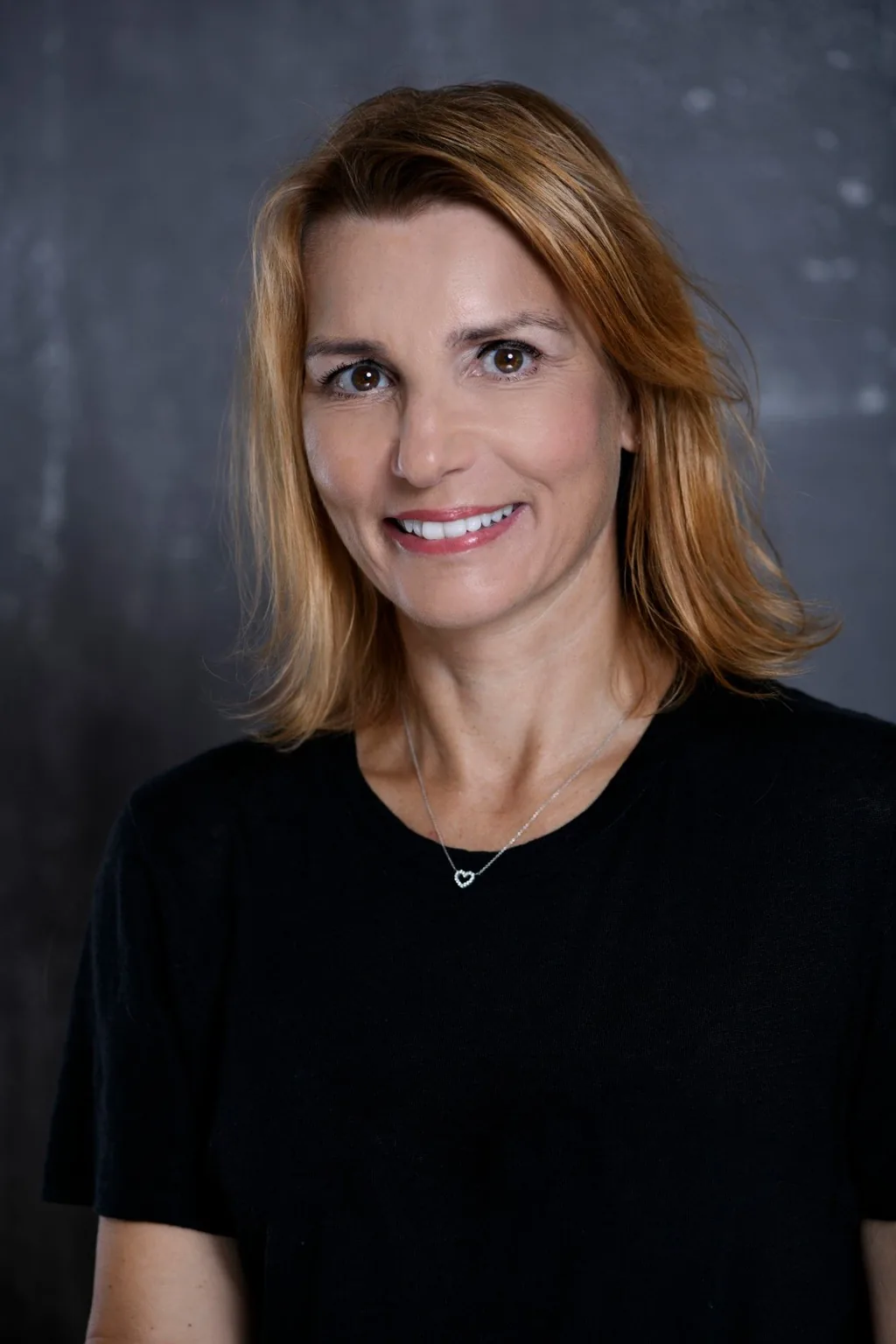
Specialist physician and Associate Professor. Menopause and longevity.
I work in the preventive medicine of the future, with the aim of adding not just years to life,
but life to years.
Medicine today is very good at diagnosing and treating disease once it has arisen.
But many of the processes that later lead to cardiovascular disease, metabolic disease, osteoporosis,
and cognitive decline develop over decades before they cross our diagnostic thresholds.
I believe we need to start earlier.
For me, longevity is therefore above all about healthspan: how we can increase the number of years we live
with our health, function, and quality of life intact. It is not about chasing an extremely long
life, but about understanding which factors we can actually influence while we are still healthy.
The same perspective is central to my work with women’s health. Women live longer than men but
also spend more years in poor health. Menopause is therefore not just a few years of hormonal
symptoms to be treated. It is a biological turning point in midlife and an opportunity to influence
a woman’s health over the coming decades. Narrowing the women’s health gap and extending our
healthspan are, to me, two parts of the same idea: medicine needs to start earlier.
My path here
I have been a licensed physician since 2001, a specialist since 2013, and I am an Associate Professor
in medical epidemiology at Sahlgrenska Academy. I defended my PhD at Karolinska Institutet and then
did a postdoc at Harvard School of Public Health. My background is in pediatric medicine and research,
but the path to what I do today also became personal.
At forty-six, I lay one night fully dressed in the on-call room and felt my whole body
vibrating. The symptoms returned night after night, my sleep deteriorated, and eventually I was on
sick leave for a few months. I was investigated neurologically for MS and other neurological
diseases. None of the colleagues I turned to for help mentioned my sex hormones. I was in
perimenopause.
When I finally received hormone therapy, while also beginning to apply the same principles of
sleep, recovery, diet, and physical activity that I recommended to my own patients,
the symptoms subsided. I started sleeping again.
That experience changed how I see women’s health. I had sought care myself for a range of symptoms without
anyone seeing the connections or putting the whole picture together.
It is an experience I share with many women. But it also led me to ask a bigger question: how much
could we prevent if we started seeing risks and changes earlier, instead of waiting until they
had become disease?
How I work
As a researcher and epidemiologist, I am trained to think in long time frames, to understand risk and association, and to distinguish between what we know, what we believe, and what we do not yet have good enough data on. I want to know how large an effect actually is, whom it applies to, and whether it is relevant to the particular person in front of me.
My interest in a more individualized and preventive way of working led me on to functional medicine, through four years of further training in the US with certification from the Institute for Functional Medicine and the American Academy of Anti-Aging Medicine.
Today I work with menopause, prevention, and longevity as parts of the same medical whole. My approach is to measure, interpret, and follow over time. I start from your history, heredity, symptoms, and lifestyle, and add laboratory tests and other investigations when they contribute relevant information. The goal is not to optimize as many values as possible, but to understand which factors affect your health today and which may affect how you feel in ten, twenty, and thirty years.
You receive a concrete, individualized written plan that we follow up and adjust when needed. Lifestyle does the heavy lifting. I use medical treatment when it is warranted, and I also say when it is not.
Personal care, wherever you live
All consultations take place by video. I keep my patient group small so that I can prepare each visit properly and follow each person over time. It is the same physician all the way through. I read your labs, make the medical assessment, write your plan, and follow it up.
Lab work is done through Synlab, and investigations that require special equipment through selected partners. Within a membership you can ask questions between visits and receive a reply within 24 hours on weekdays.
To me, this is how the preventive medicine of the future should work: personal, long-term, and grounded in science, with its eyes on the health you want to keep, not just the diseases we want to avoid.
Credentials
Licensed physician
2001
Specialist physician
2013
PhD
Medical epidemiology · Karolinska Institutet, 2000
Postdoc
Harvard School of Public Health, 2002–2004
Associate Professor
Sahlgrenska Academy, 2012
Functional medicine
IFM · Certified Functional Medicine Practitioner, 2021
Anti-Aging & Longevity
A4M Fellowship (USA), 2022
Hyperbaric oxygen therapy
IBUM (USA), 2023
Network
Longevity Docs, member since 2025
The certificate in hyperbaric oxygen therapy is a training credential. The treatment is not part of
what I offer.
Research
As a researcher at Karolinska Institutet and Sahlgrenska Academy, I have supervised three doctoral students
to their PhD and authored a number of peer-reviewed publications. My doctoral work on
HPV and cervical cancer was awarded the Chorafas Prize.
Selected publications
Josefsson AM, Magnusson PK, Ylitalo N, Quarforth-Tubbin P, Pontén J, Adami H-O, Gyllensten UB.
p53 polymorphism and risk of cervical cancer.
Nature. 1998;396:531.
PubMed →
Ylitalo N, Sorensen P, Josefsson A, Frisch M, Sparén P, Pontén J, Gyllensten U, Melbye M, Adami H-O.
Smoking and oral contraceptives as risk factors for cervical carcinoma in situ.
Int J Cancer. 1999;81:357–65.
PubMed →
Josefsson AM, Magnusson PK, Ylitalo N, Sorensen P, Qwarforth-Tubbin P, Andersen P-K, Melbye M, Adami H-O, Gyllensten UB.
Viral load of human papillomavirus 16 as a determinant for development of cervical carcinoma in situ: a nested case-control study.
Lancet. 2000;355:2189–93.
PubMed →
Ylitalo N, Sorensen P, Josefsson AM, Magnusson PK, Andersen P-K, Pontén J, Adami H-O, Gyllensten UB, Melbye M.
Consistent high viral load of human papillomavirus 16 and risk of cervical carcinoma in situ: a nested case-control study.
Lancet. 2000;355:2194–8.
PubMed →
See all publications · 24 in PubMed
All publications in PubMed under the names Ylitalo N and Ylitalo Helm N, newest first. Checked against PubMed on September 17, 2026.
El Malla H, Steineck G, Ylitalo Helm N, Wilderäng U, El Sayed Elborai Y, Elshami M et al.
Cancer disclosure-account from a pediatric oncology ward in Egypt.
Psychooncology. 2017;26(5):679-685.
PubMed →
Lu D, Sundström K, Sparén P, Fall K, Sjölander A, Dillner J et al.
Bereavement Is Associated with an Increased Risk of HPV Infection and Cervical Cancer: An Epidemiological Study in Sweden.
Cancer Res. 2016;76(3):643-51.
PubMed →
Sundström K, Ploner A, Arnheim-Dahlström L, Eloranta S, Palmgren J, Adami HO et al.
Interactions Between High- and Low-Risk HPV Types Reduce the Risk of Squamous Cervical Cancer.
J Natl Cancer Inst. 2015;107(10).
PubMed →
El Malla H, Ylitalo Helm N, Wilderäng U, El Sayed Elborai Y, Steineck G, Kreicbergs U
Adherence to medication: A nation-wide study from the Children's Cancer Hospital, Egypt.
World J Psychiatry. 2013;3(2):25-33.
PubMed →
El Malla H, Kreicbergs U, Steineck G, Wilderäng U, Elborai Yel S, Ylitalo N
Parental trust in health care: a prospective study from the Children's Cancer Hospital in Egypt.
Psychooncology. 2013;22(3):548-54.
PubMed →
Sundström K, Ploner A, Dahlström LA, Palmgren J, Dillner J, Adami HO et al.
Prospective study of HPV16 viral load and risk of in situ and invasive squamous cervical cancer.
Cancer Epidemiol Biomarkers Prev. 2013;22(1):150-8.
PubMed →
Dahlström LA, Ylitalo N, Sundström K, Palmgren J, Ploner A, Eloranta S et al.
Prospective study of human papillomavirus and risk of cervical adenocarcinoma.
Int J Cancer. 2010;127(8):1923-30.
PubMed →
Sundström K, Eloranta S, Sparén P, Arnheim Dahlström L, Gunnell A, Lindgren A et al.
Prospective study of human papillomavirus (HPV) types, HPV persistence, and risk of squamous cell carcinoma of the cervix.
Cancer Epidemiol Biomarkers Prev. 2010;19(10):2469-78.
PubMed →
Skoogh J, Ylitalo N, Larsson Omeróv P, Hauksdóttir A, Nyberg U, Wilderäng U et al.
'A no means no': measuring depression using a single-item question versus Hospital Anxiety and Depression Scale (HADS-D).
Ann Oncol. 2010;21(9):1905-1909.
PubMed →
Ylitalo N, Valdimarsdóttir U, Onelöv E, Dickman PW, Steineck G
Guilt after the loss of a husband to cancer: is there a relation with the health care provided?
Acta Oncol. 2008;47(5):870-8.
PubMed →
Gunnell AS, Ylitalo N, Sandin S, Sparén P, Adami HO, Ripatti S
A longitudinal Swedish study on screening for squamous cell carcinoma and adenocarcinoma: evidence of effectiveness and overtreatment.
Cancer Epidemiol Biomarkers Prev. 2007;16(12):2641-8.
PubMed →
Brogly SB, Watts DH, Ylitalo N, Franco EL, Seage GR 3rd, Oleske J et al.
Reproductive health of adolescent girls perinatally infected with HIV.
Am J Public Health. 2007;97(6):1047-52.
PubMed →
Brogly SB, Ylitalo N, Mofenson LM, Oleske J, Van Dyke R, Crain MJ et al.
In utero nucleoside reverse transcriptase inhibitor exposure and signs of possible mitochondrial dysfunction in HIV-uninfected children.
AIDS. 2007;21(8):929-38.
PubMed →
Gunnell AS, Tran TN, Torrång A, Dickman PW, Sparén P, Palmgren J et al.
Synergy between cigarette smoking and human papillomavirus type 16 in cervical cancer in situ development.
Cancer Epidemiol Biomarkers Prev. 2006;15(11):2141-7.
PubMed →
Ylitalo N, Brogly S, Hughes MD, Nachman S, Dankner W, Van Dyke R et al.
Risk factors for opportunistic illnesses in children with human immunodeficiency virus in the era of highly active antiretroviral therapy.
Arch Pediatr Adolesc Med. 2006;160(8):778-87.
PubMed →
Ylitalo N, Josefsson A, Melbye M, Sörensen P, Frisch M, Andersen PK et al.
A prospective study showing long-term infection with human papillomavirus 16 before the development of cervical carcinoma in situ.
Cancer Res. 2000;60(21):6027-32.
PubMed →
Ylitalo N, Sørensen P, Josefsson AM, Magnusson PK, Andersen PK, Pontén J et al.
Consistent high viral load of human papillomavirus 16 and risk of cervical carcinoma in situ: a nested case-control study.
Lancet. 2000;355(9222):2194-8.
PubMed →
Josefsson AM, Magnusson PK, Ylitalo N, Sørensen P, Qwarforth-Tubbin P, Andersen PK et al.
Viral load of human papilloma virus 16 as a determinant for development of cervical carcinoma in situ: a nested case-control study.
Lancet. 2000;355(9222):2189-93.
PubMed →
Ylitalo N, Sørensen P, Josefsson A, Frisch M, Sparén P, Pontén J et al.
Smoking and oral contraceptives as risk factors for cervical carcinoma in situ.
Int J Cancer. 1999;81(3):357-65.
PubMed →
Josefsson AM, Magnusson PK, Ylitalo N, Quarforth-Tubbin P, Pontén J, Adami HO et al.
p53 polymorphism and risk of cervical cancer.
Nature. 1998;396(6711):531.
PubMed →
Ylitalo N, Pontén J
[Strong connection between papillomavirus and cervix cancer. More precise cytology is needed, cancer transformation may occur rapidly].
Läkartidningen. 1998;95(15):1632-6. In Swedish.
PubMed →
Samiotaki M, Kwiatkowski M, Ylitalo N, Landegren U
Seven-color time-resolved fluorescence hybridization analysis of human papilloma virus types.
Anal Biochem. 1997;253(2):156-61.
PubMed →
Allen M, Kalantari M, Ylitalo N, Pettersson B, Hagmar B, Scheibenpflug L et al.
HLA DQ-DR haplotype and susceptibility to cervical carcinoma: indications of increased risk for development of cervical carcinoma in individuals infected with HPV 18.
Tissue Antigens. 1996;48(1):32-7.
PubMed →
Ylitalo N, Bergström T, Gyllensten U
Detection of genital human papillomavirus by single-tube nested PCR and type-specific oligonucleotide hybridization.
J Clin Microbiol. 1995;33(7):1822-8.
PubMed →
Nathalie also accepts speaking engagements on women’s health and longevity.
See speaker profile →
Beyond being medically excellent, you are very skilled at the human side of patient care. I find you very present and attentive, someone who sees the whole person. With your help I feel sharper and much better. Thank you!
Marie
Who it’s for
My patients.
I don’t take everyone. That is good for you, because it means I take you seriously.
For our work to produce results, we need to agree on the direction, and you need to
be prepared to take the steps we arrive at.
01
You have been looking for answers
Long-standing complaints without a clear diagnosis. Digestive, autoimmune, hormonal, fatigue. Conventional care has ruled out what is acute and what requires treatment, and you want to understand the whole picture.
02
You want to prevent, not put out fires
Healthy, but curious about how you are aging. You want to measure what can actually be measured, and optimize while there is still time.
03
You are prepared to change
I take you on if I believe I can help you, and if you have the discipline to change your habits. Prescriptions rarely solve the underlying problem. Lifestyle and biology do the work.
We use strictly necessary cookies so the site works. With your consent, we also use Google Analytics 4 (anonymized) to understand how the site is used. Read more in our cookie policy.